HALT: Hungry, Angry, Lonely, Tired and How to Use It
Key takeaways
- HALT stands for hungry, angry, lonely and tired, a quick self-check from addiction recovery that asks you to meet a basic need before an urge takes over.
- HALT itself has barely been studied, and the 2026 paper that describes it reports no data on whether it works.
- Each of its four states has research of its own, including a study of 64 adults in Central Europe that linked greater hunger with more anger and irritability.
- Loneliness has direct evidence from porn studies, with surveys linking it to problematic porn use, though those links don't show which causes which.
- HALT leaves out boredom, stress and cues such as a phone in bed, so add those to your check and use urge surfing when an urge stays.
On this page
- HALT (Hungry, Angry, Lonely, Tired) at a Glance
- What Does HALT Stand For?
- Does HALT Work? What the Research Says
- Why Does Being Hungry Matter?
- Why Does Being Angry Matter?
- Why Does Being Lonely Matter?
- Why Does Being Tired Matter?
- How Do You Use HALT When an Urge Hits?
- Is There a HALT Worksheet You Can Save?
- What Does HALT Leave Out?
- When to Get Help
- The Bottom Line
- Sources
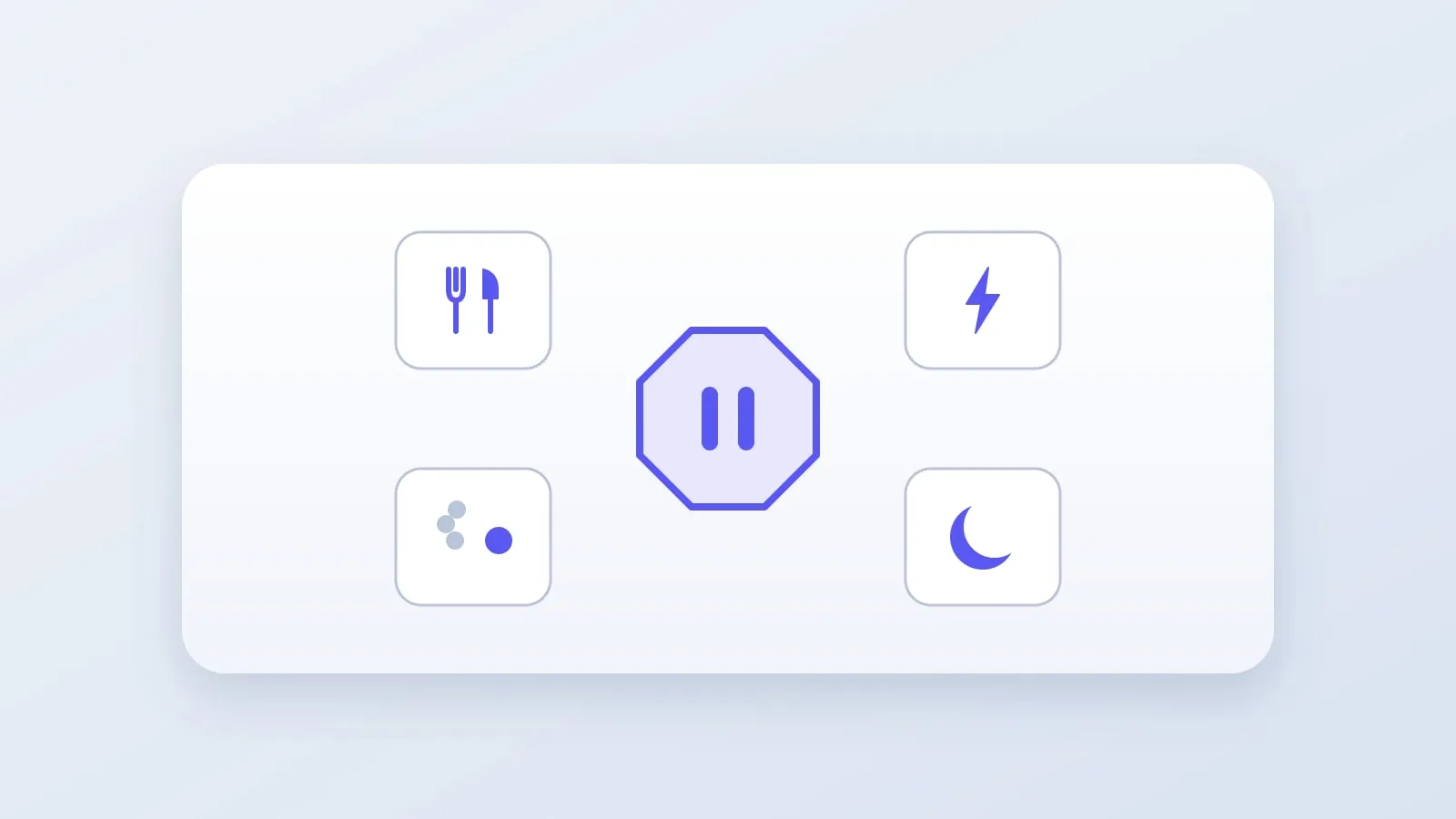
HALT stands for hungry, angry, lonely, tired. It’s a quick check from addiction recovery: when an urge hits, pause, ask whether any of the four fit, and meet that need before you decide what to do next.
HALT is recovery-community language, not a clinical test. A 2026 paper on it says the acronym has long been used in recovery, but its first use and its creator are difficult to determine (Kretchman, 2026). HALT itself has barely been studied, but each of its four states has research behind it, and loneliness has been studied directly in relation to porn use. This guide is for you if you’re trying to quit or cut back and want a tool for the moment an urge hits. For the whole plan, start with how to quit porn.
HALT (Hungry, Angry, Lonely, Tired) at a Glance
| Question | Short answer |
|---|---|
| What does HALT stand for? | Hungry, angry, lonely and tired. Hunger and tiredness are physical states, and anger and loneliness are emotional ones (Cleveland Clinic, 2022). |
| How do you use it? | Stop what you’re doing when an urge hits, check the four states, and address the need you find (Cleveland Clinic, 2022). |
| Has HALT been studied? | Barely. The 2026 paper that describes it calls the research “scant” and reports no data on whether HALT works (Kretchman, 2026). |
| Is anger linked with relapse? | In an overview of alcohol relapse, negative emotional states such as anger were linked with the highest rate of relapse (Larimer et al., 1999). |
| Does hunger go with anger? | In a 21-day study of 64 adults in Central Europe, greater hunger went with more anger and irritability (Swami et al., 2022). |
| Is loneliness linked with porn use? | Yes, in surveys. In one survey of 1,247 people, porn use and loneliness were positively associated (Butler et al., 2018). |
| Does sleep go with self-control? | Better sleep was related to better self-control in a meta-analysis of 61 studies (Guarana et al., 2021). |
| What does HALT leave out? | Boredom, stress and cues such as being alone in bed. Stress reduction and boredom avoidance had weak-to-moderate links with problematic porn use (Bőthe et al., 2021). |
What Does HALT Stand For?
H is for hungry, A for angry, L for lonely and T for tired: two physical states and two emotional ones.
A Cleveland Clinic explainer calls HALT one of the tools often used in rehab programs and 12-step meetings. In it, psychiatrist David Streem, MD, describes the method as a pause: you stop, or halt, what you’re doing and look at the root of how you’re feeling (Cleveland Clinic, 2022). The point is to check the four states before an urge makes the decision for you.
A narrative review of addiction recovery in general, not porn, calls HALT “a simple reminder of poor self-care.” It places the reminder in the emotional stage of relapse, when people bottle up feelings, pull away from others and eat and sleep poorly, and it calls poor self-care the common denominator of that stage (Melemis, 2015).
Does HALT Work? What the Research Says
No one knows yet. A 2026 paper calls the research “scant” and reports no data on whether HALT works, but each of the four states has research of its own.
The paper discusses HALT rather than testing it. Its author writes that there is “scant research of HALT in the scientific literature, though there is examination of related individual components” (Kretchman, 2026).
Relapse research on alcohol points at emotions too. The overview by Larimer, Palmer and Marlatt says that negative emotional states, such as anger, anxiety, depression, frustration and boredom, were associated with the highest rate of relapse. The overview is about alcohol, though it says the model also applies to users of other drugs (Larimer et al., 1999).
The sections below go through the four states one at a time, and note where the evidence is thin.
Why Does Being Hungry Matter?
Hunger goes with more irritability in everyday life, according to one study that tracked mood several times a day. That study is about mood, not urges or porn.
The Cleveland Clinic article says physical hunger “can lead to irritability, anger or feelings of nausea” (Cleveland Clinic, 2022). Its example is someone who feels irritable after accidentally skipping lunch. Before you judge your mood, check whether you’ve eaten.
A study of everyday mood asked 64 adults in Central Europe, mostly women and mostly from Austria, to report their hunger, anger, irritability, pleasure and arousal five times a day for 21 days. The study gathered 9,142 responses. When people reported more hunger, they also reported more anger and irritability and less pleasure. Those links held after accounting for sex, age, body mass index, diet and trait anger, but arousal wasn’t linked. The authors say their sample is unlikely to be representative of Central European, German-speaking populations (Swami et al., 2022).
The table in Kretchman’s 2026 HALT paper lists getting food and water as the step to take during an urge (Kretchman, 2026). When hunger shows up, eat something simple and drink some water before you decide how you feel.
Why Does Being Angry Matter?
Anger can push toward relapse. In alcohol research, conflict with other people is a common relapse trigger, and anger can sit on top of hurt or fear.
The alcohol relapse overview says interpersonal conflict, such as an argument with a family member, brings on negative emotions and can precipitate relapse. As the overview reports it, negative emotional states and interpersonal conflict served as triggers for more than one-half of all relapse episodes in Marlatt’s (1996) analysis (Larimer et al., 1999).
Kretchman’s table describes anger as “a strong emotion that may lead to relapse as a means of reducing discomfort,” and a note adds that it may be a secondary emotion, residing beneath hurt or fear. For that moment, the table lists coping skills such as relaxation and reframing (Kretchman, 2026). In practice, name what’s under the anger and give yourself a few minutes before you respond.
Anger itself isn’t the problem. The Cleveland Clinic psychiatrist says that feeling angry doesn’t mean something is wrong with you, but that chronic, persistent anger is unhealthy. It becomes a problem when you have a hard time letting it go and it seeps into the rest of your life (Cleveland Clinic, 2022).
In an online sample of 915 US adults, 54.3% of them men, difficulty controlling impulses when upset, difficulty with clarity of emotions and not accepting emotions were linked with compulsive sexual behavior, with links that were small to moderate. The study measured being upset, not anger specifically (Rahm-Knigge et al., 2023).
Why Does Being Lonely Matter?
Loneliness is the HALT state with the most porn research. Several surveys link it with problematic porn use, and a six-month follow-up of problematic online behavior found links running in both directions.
In a survey of 1,247 people, porn use and loneliness were positively associated in all three models the authors tested. Because it was a single survey, it can’t show which causes the other (Butler et al., 2018).
In a cross-sectional study of 340 participants with an average age of 28.5, problematic porn use went with difficulty regulating emotions and with loneliness. When the authors tested the factors together, the best set for explaining problematic use was difficulty regulating emotions, loneliness and gender. Perceived stress and age weren’t part of that set. Only 4.6% reported possible problematic use. The authors list their convenience sample as a limitation (Cardoso et al., 2022).
An online survey of 213 adults, 77.5% of them men, found that loneliness went with more problematic porn use and with more difficulty regulating emotions. The authors found that difficulty regulating emotions helped explain the link (Vescan et al., 2024).
In a study of 1,441 young adults with no history of psychiatric treatment, 733 completed a follow-up six months later. Higher loneliness at the start went with more problematic cybersex later, along with more depressive and anxiety symptoms. The link ran the other way too: more problematic gaming, cyberchondria and depressive symptoms at the start went with more loneliness later. The study measured several problematic online behaviors, such as cybersex, gaming, cyberchondria and shopping, so it doesn’t measure porn use alone (Błoch & Misiak, 2026).
A 2026 paper reports four studies of loneliness and porn. The first, with 351 participants, found loneliness and problematic porn use linked at the same point in time. The second followed 103 participants over time, and the authors concluded that loneliness drove later problematic use, though one small study can’t settle that. A third, small study of 28 people developed a four-week group exercise program. In the fourth, with 92 people, that program was compared with individual exercise and a control group. The group program didn’t produce clear drops in loneliness or problematic porn use, but it stopped them from getting worse, while both rose in the control group (Lin et al., 2026).
Kretchman’s table lists reaching out to helpful resources as the step to take during an urge (Kretchman, 2026). The Cleveland Clinic psychiatrist makes a related point: being near people isn’t enough if the contact isn’t meaningful (Cleveland Clinic, 2022). In practice, text or call one person before the urge builds, and choose one group, team or activity you return to each week. An accountability partner can be one of those people, and this guide for accountability partners shows them what to do when you reach out.
Why Does Being Tired Matter?
Tiredness may make urges harder to resist. In a meta-analysis, better sleep went with better self-control, though cause and effect still need more study.
A meta-analysis of 61 independent studies found that better sleep quality and longer sleep were related to better self-control, both between people and within the same person. The authors say the causal process linking sleep and self-control still needs investigation (Guarana et al., 2021).
A study of 776 Italian adults aged 19 to 48, carried out during the COVID-19 pandemic, linked problematic online porn use with insomnia symptoms. Psychological stress and difficulty regulating emotions helped explain that link. The study was cross-sectional, so it can’t show which came first, and it used a convenience snowball sample (Musetti et al., 2022).
Kretchman’s table gives rest as the step to take during an urge, or relaxation if rest isn’t possible (Kretchman, 2026). The Cleveland Clinic advises trying to go to bed on time and wake up around the same time every day (Cleveland Clinic, 2022).
A phone in bed can keep you up later, so put it across the room before you lie down. If masturbation is part of how you fall asleep, is it bad to masturbate every day covers what the research says and what to do about it.
How Do You Use HALT When an Urge Hits?
Pause, ask the four questions, meet the need you find, then re-check the urge and log what you learned.
- Pause. Stop what you’re doing and take one slow breath. Kretchman describes HALT as a way to check in on yourself during an urge and possibly find a factor you control that helps manage the craving (Kretchman, 2026).
- Ask the four questions. Are you hungry, angry, lonely or tired? Go with your first honest answer, even if more than one fits.
- Meet the need you find. Use the quick step for that state in the worksheet below. For more replacements matched to each need, see alternatives to porn.
- Re-check the urge. If it’s still there, ride it out with urge surfing, which shows you how to let an urge rise and pass without acting on it.
- Log what you found. Write down the state, the time and the place. After a couple of weeks, the pattern is easier to see.
Is There a HALT Worksheet You Can Save?
Yes. Save this table as a screenshot and use it as a quick check. It’s a practical summary, not a validated screening tool.
| State | Ask yourself | Try now |
|---|---|---|
| Hungry | When did I last eat or drink? | Eat something simple and drink some water. |
| Angry | Is hurt or fear underneath this? | Breathe slowly, then name what’s underneath before you respond. |
| Lonely | Who can I text or call in the next hour? | Text or call one person, even briefly. |
| Tired | Am I worn out, and is it late? | Rest if you can. If not, take a few minutes to relax. |
| Bored or stressed (not part of HALT) | Am I bored or stressed? | Pick a short task that holds your attention, or take a walk. |
Over the longer term, Kretchman’s table pairs each state with a habit: planned mealtimes and snacks, regular stress reduction, social supports and activity lists, and routines that give enough rest and address barriers to good sleep (Kretchman, 2026). Build one of those into your week, starting with the state that shows up most often in your log.
What Does HALT Leave Out?
HALT doesn’t name boredom, stress or cues such as being alone in bed, and research on porn use points to all three.
In a study that built a questionnaire on porn motives, using three samples totaling 2,646 people, stress reduction, emotional distraction or suppression and boredom avoidance were among the eight common motives for watching porn. Each had weak-to-moderate links with problematic porn use. These are survey links, not proof that a motive causes problems (Bőthe et al., 2021).
The alcohol relapse overview names more situations that HALT doesn’t cover. Social pressure contributed to more than 20 percent of relapse episodes in Marlatt’s (1996) study, and positive moments such as celebrations were also high-risk. It lists cues such as seeing an advertisement or passing a favorite bar (Larimer et al., 1999). Porn has its own cues, such as being alone in bed, which the relapse triggers section describes.
Our suggestion: add one question to your check, “Am I bored or stressed?”, and use a quick step that fits. Why people watch porn lists the motives in more detail.
When to Get Help
See a therapist or doctor if urges keep winning, or if anger, loneliness, low mood or trouble sleeping lasts for weeks. If you’re in crisis, get help right away.
The Cleveland Clinic article says that when people have trouble meeting the demands of these feelings, they may need help from a therapist, a coach or someone who can help them look at how they live (Cleveland Clinic, 2022). A therapist who works with compulsive sexual behavior can help you sort out your triggers. If low mood is part of it, read about porn addiction and depression, and see treatment options for porn addiction.
If you have thoughts of harming yourself, or your mood is very low, call or text 988 (the Suicide & Crisis Lifeline in the US), or your local emergency number (988 Suicide & Crisis Lifeline, n.d.).
The Bottom Line
- HALT is a recovery check, not a research test. It comes from recovery communities, and its origin has been difficult to determine.
- Each state has some evidence. Hunger, anger, loneliness and tiredness each have research behind them, though not all of it is about porn.
- Loneliness has direct porn evidence. Most of it comes from surveys, which show links rather than causes.
- Use it as a pause, not a cure. Ask the four questions, meet the need you find, then ride out what’s left with urge surfing.
- Add what HALT misses. Boredom, stress and cues such as a phone in bed aren’t in the check, so ask about them too.
If you want help noticing these patterns, the TrueAlly app has daily check-ins, an intimacy and mood tracker and reminders, so you can note how you feel each day and look back over time.
Sources
- Błoch, M., & Misiak, B. (2026). Loneliness and the emergence of problematic online behaviours in young adults: A cross-lagged panel network analysis. Comprehensive Psychiatry, 144, 152646. https://doi.org/10.1016/j.comppsych.2025.152646
- Bőthe, B., Tóth-Király, I., Bella, N., Potenza, M. N., Demetrovics, Z., & Orosz, G. (2021). Why do people watch pornography? The motivational basis of pornography use. Psychology of Addictive Behaviors, 35(2), 172–186. https://doi.org/10.1037/adb0000603
- Butler, M. H., Pereyra, S. A., Draper, T. W., Leonhardt, N. D., & Skinner, K. B. (2018). Pornography use and loneliness: A bidirectional recursive model and pilot investigation. Journal of Sex & Marital Therapy, 44(2), 127–137. https://doi.org/10.1080/0092623X.2017.1321601
- Cardoso, J., Ramos, C., Brito, J., & Almeida, T. C. (2022). Predictors of pornography use: Difficulties in emotion regulation and loneliness. The Journal of Sexual Medicine, 19(4), 620–628. https://doi.org/10.1016/j.jsxm.2022.01.005
- Cleveland Clinic. (2022, May 24). HALT: Pay attention to these four stressors. https://health.clevelandclinic.org/halt-hungry-angry-lonely-tired
- Guarana, C. L., Ryu, J. W., O’Boyle, E. H., Lee, J., & Barnes, C. M. (2021). Sleep and self-control: A systematic review and meta-analysis. Sleep Medicine Reviews, 59, 101514. https://doi.org/10.1016/j.smrv.2021.101514
- Kretchman, D. (2026). HALT: Relapse prevention to resilience. Advances in Drug and Alcohol Research, 5, 15477. https://doi.org/10.3389/adar.2025.15477
- Larimer, M. E., Palmer, R. S., & Marlatt, G. A. (1999). Relapse prevention: An overview of Marlatt’s cognitive-behavioral model. Alcohol Research & Health, 23(2), 151–160. https://pmc.ncbi.nlm.nih.gov/articles/PMC6760427/
- Lin, Y., Wu, Y., & Peng, K. (2026). Breaking the cycle between loneliness and problematic pornography use: A group-based physical exercise intervention. Applied Psychology: Health and Well-Being, 18(1), e70119. https://doi.org/10.1111/aphw.70119
- Melemis, S. M. (2015). Relapse prevention and the five rules of recovery. Yale Journal of Biology and Medicine, 88(3), 325–332. https://pmc.ncbi.nlm.nih.gov/articles/PMC4553654/
- Musetti, A., Gori, A., Alessandra, A., Topino, E., Terrone, G., Plazzi, G., Cacioppo, M., & Franceschini, C. (2022). The interplay between problematic online pornography use, psychological stress, emotion dysregulation and insomnia symptoms during the COVID-19 pandemic: A mediation analysis. Nature and Science of Sleep, 14, 83–92. https://doi.org/10.2147/NSS.S348242
- Rahm-Knigge, R. L., Gleason, N., Mark, K., & Coleman, E. (2023). Identifying relationships between difficulties with emotion regulation and compulsive sexual behavior. Archives of Sexual Behavior, 52(8), 3443–3455. https://doi.org/10.1007/s10508-023-02690-8
- Swami, V., Hochstöger, S., Kargl, E., & Stieger, S. (2022). Hangry in the field: An experience sampling study on the impact of hunger on anger, irritability, and affect. PLOS ONE, 17(7), e0269629. https://doi.org/10.1371/journal.pone.0269629
- Vescan, M., Flack, M., & Caudwell, K. M. (2024). Loneliness and problematic pornography use: What is the role of emotion regulation and interaction with content creators? Addictive Behaviors Reports, 19, 100550. https://doi.org/10.1016/j.abrep.2024.100550
- 988 Suicide & Crisis Lifeline. (n.d.). 988 Lifeline. https://988lifeline.org/
Frequently asked questions
Who came up with HALT?
Its origin is unclear. A 2026 paper on HALT says its first use and the person who formulated it have been difficult to determine. Its underlying idea, that physical and emotional states affect relapse, has been part of recovery for many years. Be cautious with any exact origin story you hear, and judge HALT by whether it helps you pause before an urge.
Is HALT only for drug and alcohol recovery?
No. A 2026 paper describes HALT as used for relapse prevention in recovery from substance or behavior compulsions, so it isn't limited to drugs and alcohol. Loneliness and sleep have also been studied alongside problematic porn use. HALT itself has barely been studied, for porn or anything else, so treat it as a practical check, not a proven treatment.
How often should you do a HALT check?
Whenever an urge shows up, and at regular times if you want steady self-awareness. A Cleveland Clinic article on HALT says check-ins can happen daily or hourly, and that how often you use HALT is up to you. Our suggestion is to check in before meals and at bedtime, when hunger and tiredness tend to build.
What if none of the four fit?
Then the trigger may be something HALT doesn't name, such as boredom, stress or a cue like a phone in bed. Name what you notice, give the urge a few minutes, and ride it out with a step that fits. Then write the trigger in your log, so a pattern over a couple of weeks shows what HALT is missing for you.
What is HALT FEST?
HALT FEST is an expanded version proposed by the author of a 2026 paper. It adds Free, meaning availability; Environment or culture, such as celebrations; Sick or physical health, including pain; and Transitions or stressors, such as changes in relationships or employment. The author lists research on the expanded version as a future need, so treat it as a proposal, not a tested tool.
Is HALT the same as urge surfing?
No. HALT asks what you need right now, such as food, rest, company or a way to let go of anger. Urge surfing is a way to ride out an urge without acting on it while it rises and falls. They fit together: run the four questions first, then ride out whatever urge is left.
How can a partner or friend help with HALT?
A partner or friend can agree on a simple check-in, such as a text asking whether you're hungry, angry, lonely or tired. They can ask the four questions without lecturing, then help with the next step, such as a snack, a walk or a call. Agree on this ahead of time, when neither of you is in the middle of an argument or an urge.
Can HALT replace therapy?
No. HALT is a self-check, not treatment, and it doesn't diagnose anything. It can help you notice needs before an urge builds. If urges keep winning, or anger, loneliness, low mood or trouble sleeping lasts for weeks, a therapist or doctor can help you look at the bigger picture. If you have thoughts of harming yourself, call or text 988 (the Suicide & Crisis Lifeline in the US), or your local emergency number.